
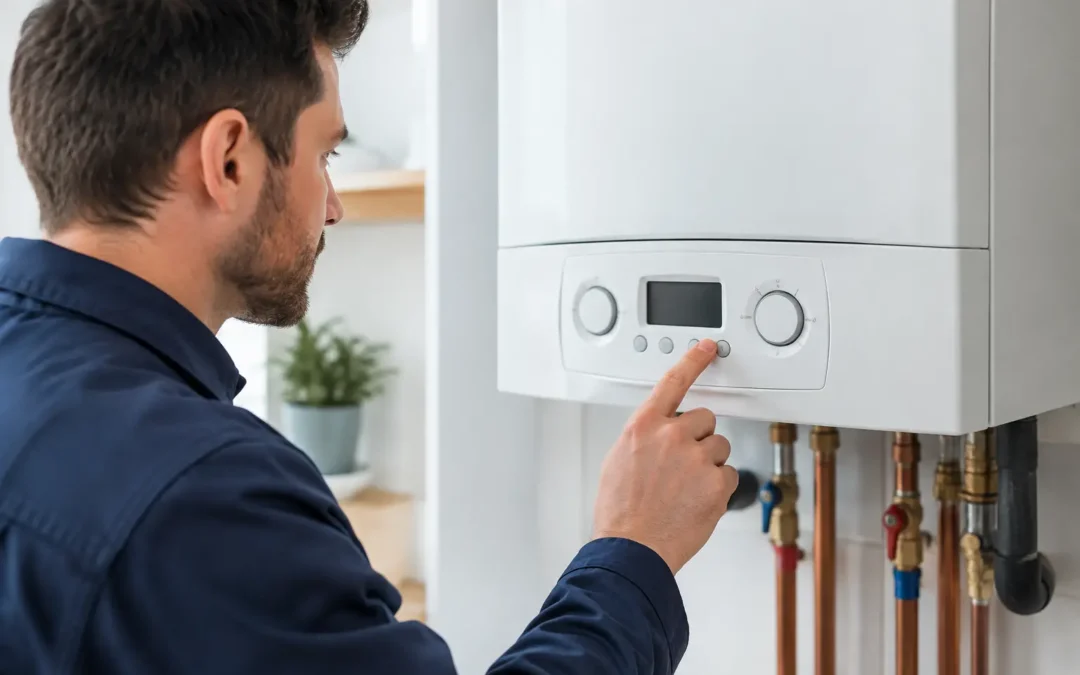
A boiler that suddenly stops working can make a cold morning feel much longer, particularly when there is no heating or hot water. Knowing how to reset boiler controls safely may get it running again after a minor lockout. But a reset is not a repair. If the same fault returns, the boiler is telling you it needs checking.
For households and landlords across West Yorkshire, the safest approach is simple: try one sensible reset, look for obvious signs of a problem, then call a Gas Safe registered engineer if it will not restart or locks out again.
First, check whether it is safe to reset the boiler
Do not press reset if you can smell gas, suspect a gas leak, see scorching around the boiler, or notice water dripping onto electrical parts. Turn off the gas supply only if you know where the emergency control valve is and can do so safely. Do not operate electrical switches, use a naked flame or attempt to investigate the appliance. Leave the property and contact the gas emergency service from outside.
A reset is also not the answer if your carbon monoxide alarm is sounding, anyone in the property feels dizzy, sick or unusually tired, or the boiler flue appears loose or damaged. Open windows if it is safe, leave the building and seek urgent professional advice. Carbon monoxide cannot be seen or smelled, so never ignore an alarm.
If there are no safety concerns, check the boiler display or fault light. Many modern boilers show an error code, while older models may display a flashing red light or a symbol. Take a photo or write the code down before resetting. It can save time if an engineer needs to attend later.
How to reset boiler controls safely
The exact method depends on the make and model, so the boiler manual is always the best reference. In most homes, however, the process follows the same pattern.
First, make sure the boiler has electrical power. Check that its fused spur is switched on and that no relevant circuit breaker has tripped at the consumer unit. Then check your thermostat is set above the current room temperature and that the heating programmer is set to be on. A boiler cannot fire for heating if there is no demand from the controls.
Next, look at the pressure gauge if your boiler has one. When the system is cold, most sealed central-heating systems should usually read around 1 to 1.5 bar. If the needle is well below 1 bar, the boiler may have locked out because pressure is too low. Some displays will show the pressure digitally instead.
If the pressure is within the normal range and the display indicates a lockout, locate the reset control. It may be a button marked “reset”, a button with a flame symbol, or a dial that needs turning to the reset position for a few seconds. Press or hold it only for the period stated in the manual, commonly three to ten seconds, then wait a few minutes for the boiler to attempt ignition.
You may hear the fan and ignition sequence before the boiler starts. If it fires up and the fault code clears, run the heating or hot water for a short while and keep an eye on the display. One successful restart after a temporary interruption is not unusual. Repeated lockouts are different.
Do not keep resetting the boiler over and over. One reset attempt is reasonable. A second attempt may be appropriate only if the manufacturer instructions allow it and you have corrected a clear, harmless issue such as restoring system pressure. Beyond that, stop and arrange a diagnosis.
If the boiler pressure is low
Low pressure is a common reason for a boiler to stop, especially after a radiator has been bled or when a small leak has developed. If you are confident using your filling loop and the manufacturer instructions explain the process, add water slowly until the gauge reaches the recommended cold pressure. Close the valves fully afterwards.
Do not overfill the system. Pressure that rises towards 3 bar when the heating is running, or pressure that repeatedly drops back down, needs investigation. There may be a leak, a problem with the expansion vessel or a faulty pressure relief valve. Topping the system up again and again can hide the real issue and cause further damage.
If the condensate pipe may be frozen
During freezing weather, a blocked or frozen external condensate pipe can cause a modern condensing boiler to lock out. The pipe is usually a plastic pipe running from the boiler to an outside drain. Signs can include a gurgling sound, a fault code and the boiler failing during a cold spell.
Only attempt to thaw an accessible pipe using warm water – never boiling water – and only if it can be done safely from ground level. Do not climb ladders, dismantle pipework or use a flame. Once the pipe has thawed, try a single reset. If it freezes repeatedly, the pipe route or insulation may need improving.
When resetting will not fix the problem
Boilers lock out to protect themselves and the household. The underlying cause could be straightforward, but it can also involve components that must only be checked by a qualified engineer. Common causes include ignition failure, a faulty fan, a blocked condensate route, a pump issue, a sensor fault, poor water circulation or a problem with the gas supply.
An error code helps narrow this down, but it does not provide a safe diagnosis on its own. Two boilers can show a similar code for different reasons, and clearing it does not confirm the fault has gone away.
Arrange a professional repair if the boiler will not reset, the same code returns, pressure keeps falling, radiators remain cold, or you have hot water but no heating. You should also call for help if the boiler is noisy, leaking, making banging sounds, or frequently switching itself on and off.
For a rented property, tenants should report the issue to their landlord or managing agent as soon as possible, particularly where there is no heating or hot water. Landlords should avoid asking tenants to remove the boiler casing or carry out technical checks. A prompt visit from a Gas Safe registered engineer protects the property, the occupants and your legal responsibilities.
Checks that can prevent another boiler lockout
A reset often works best when the boiler has been properly maintained. An annual service gives an engineer the opportunity to inspect combustion, clean relevant parts, check the condensate arrangement, test safety devices and identify worn components before they lead to a breakdown.
It is also worth keeping an eye on system pressure every few weeks, especially in older heating systems. If you need to top it up more than occasionally, arrange a check rather than waiting for the next lockout. Look around radiators, valves and visible pipework for damp patches or corrosion, but do not remove boiler panels to inspect inside.
During winter, keep the heating on a low background setting when the property is empty where practical. This can reduce the risk of frozen pipework. If you are a landlord with an empty property, regular checks are particularly worthwhile during prolonged cold weather.
Get a clear diagnosis, not just another reset
A boiler that fails once may simply need a reset. A boiler that keeps failing needs a proper answer. Tante Plumbing & Heating provides boiler diagnostics and repairs for homes and landlords across Leeds, Birstall, Batley and the wider West Yorkshire area, with Gas Safe registered work, clear explanations and upfront quotations before repairs begin.
When you call, have the boiler make and model, fault code, pressure reading and a brief description of what happened ready. That information helps an engineer arrive prepared and gives you a quicker route back to reliable heating and hot water. If the reset has not held, booking a proper check now is usually safer – and often less expensive – than waiting for a complete breakdown.