
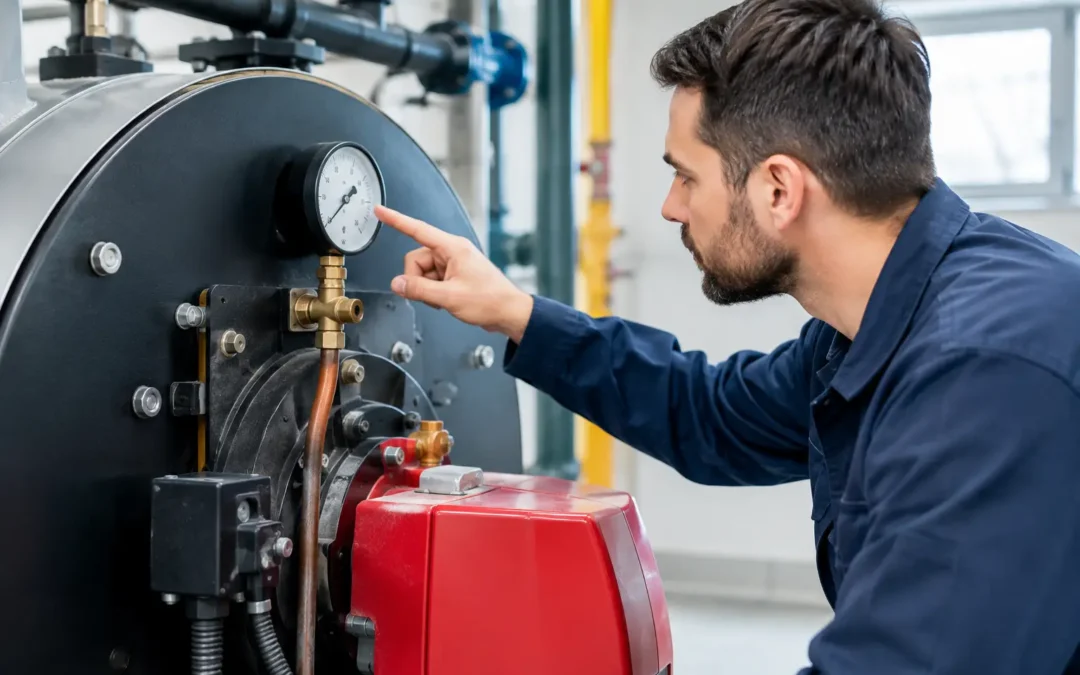
A boiler pressure gauge falling below 1 bar can leave your radiators lukewarm, stop the heating altogether or trigger a fault code just when you need hot water. If you are asking what causes low boiler pressure, the answer is usually that water has left the sealed heating system – but finding out where it went matters more than simply topping it back up.
Most modern combi and system boilers work best at around 1 to 1.5 bar when cold. The reading will normally rise a little while the heating is running, then fall again as the system cools. A gradual drop over many months may be minor, but pressure that repeatedly falls within days or weeks needs a proper diagnosis.
What causes low boiler pressure in a home?
Low pressure means there is not enough water circulating through the central-heating system. On a sealed system, that water should remain contained. When the gauge drops, it is commonly due to a small leak, water released from a safety valve, or pressure lost while radiators have been bled.
It can be tempting to keep using the filling loop and treat the gauge as the problem. Repressurising may get the boiler working temporarily, but it does not fix the reason the pressure fell. Repeated topping up can also introduce fresh water into the system, increasing the risk of corrosion and sludge over time.
A leak on the heating system
A visible leak is the most straightforward cause. Check beneath radiators, around radiator valves, pipe joints, the boiler casing and any exposed pipework. Look for damp patches, green or white staining around fittings, rust marks, or a small pool of water.
However, many leaks are not obvious. Pipework may run below floors, inside boxing or through walls, and a tiny leak can evaporate before it forms a puddle. Leaks around radiator valve spindles are particularly easy to miss. If the pressure keeps dropping and you cannot see a cause, an engineer can inspect the system properly rather than guessing.
Do not remove the boiler casing to investigate. Components inside must only be checked by a Gas Safe registered engineer.
Radiators have been bled
Bleeding a radiator releases trapped air, along with a small amount of system water. That is normal, but the boiler pressure may need restoring afterwards. Check the gauge once the radiators are bled and the system is cold.
If one radiator repeatedly fills with air, or you need to bleed several radiators regularly, it may point to a wider issue such as a leak, corrosion or poor system condition. It is worth having this assessed rather than continually venting air and refilling the system.
The pressure relief valve is discharging water
Your boiler has a pressure relief valve, often called a PRV. It is a safety device designed to release water outside if the boiler pressure becomes too high. You may see a copper pipe leaving the boiler and terminating outdoors. If water is dripping or running from that pipe, the system will lose pressure.
A PRV may discharge because the pressure was overfilled, but a recurring problem often indicates a fault. The valve itself may not reseal correctly, or the boiler’s expansion vessel may no longer be working as it should. Both require an engineer’s attention.
A failed expansion vessel
The expansion vessel manages the natural increase in water volume as your central heating warms up. When it loses its internal air charge or develops a fault, pressure can rise sharply while the heating is on. The PRV then releases water to protect the system. Once everything cools, the gauge can be left below its usual level.
A useful clue is a gauge that starts at a normal cold pressure, climbs towards 2.5 or 3 bar when the heating is running, then drops low again later. This is not a fault to ignore. An engineer can test the vessel, check the PRV and establish whether a repair or replacement part is needed.
A fault within the boiler
Less commonly, pressure loss comes from an internal component, such as a heat exchanger, pump seal or automatic air vent. These faults are not always visible from outside the boiler, and the symptoms can overlap with an external leak.
A professional diagnosis is worthwhile here. It avoids paying for parts that do not solve the problem and confirms whether repair remains the sensible option for the age and condition of the boiler.
What you can safely check before arranging a repair
Start by looking at the pressure gauge when the boiler is cold. If it is below 1 bar, the boiler may show a low-pressure fault or refuse to operate. Take a note of the reading, then check again after a day or two. This gives useful information about how quickly pressure is being lost.
You can also inspect visible radiator valves, pipework and the external PRV discharge pipe for signs of water. If you have recently bled radiators and the boiler instructions clearly show how to use the filling loop, you may be able to restore the pressure once. Follow the manufacturer guidance for your particular model and do not overfill it.
As a general guide, refill slowly to about 1 to 1.5 bar when the system is cold, then close the filling loop fully. Some boilers have an integrated filling key or lever, while others have an external braided hose. The arrangement varies, so never force a valve or assume another boiler works the same way.
If the pressure drops again, do not keep refilling it. Repeated loss means water is escaping or being discharged somewhere, and that is the issue that needs fixing.
When low boiler pressure needs urgent attention
Low pressure alone is not usually a gas emergency, but it can leave a household without heating or hot water and may signal a leak that is getting worse. Arrange prompt help if the boiler repeatedly loses pressure, water is coming from the external discharge pipe, you can see a leak, or the pressure rises close to 3 bar when the heating is on.
Turn the boiler off and seek urgent professional advice if there is a significant water leak around the appliance. Avoid using electrical switches near standing water. If you smell gas, suspect carbon monoxide, or a carbon monoxide alarm sounds, leave the property, call the National Gas Emergency Service on 0800 111 999, and do not return until it is safe.
For landlords, a boiler that will not maintain pressure can quickly become a tenant welfare issue, especially in colder weather. A repair visit can identify the fault and help restore dependable heating without relying on repeated temporary resets.
Why a proper diagnosis saves money
Low pressure can look like a simple job, but the correct remedy depends on the cause. Tightening a radiator valve may resolve a small external leak. A leaking PRV or failed expansion vessel needs a different repair. Hidden leaks can require more systematic testing before any work is carried out.
A clear diagnosis should include an explanation of what has been found, what repair is recommended and the expected cost before work starts. That gives you the choice to repair, monitor or consider replacement where an older boiler has several developing faults.
Tante Plumbing & Heating provides boiler diagnostics and repairs across Leeds and the surrounding West Yorkshire area, with Gas Safe registered engineers, straightforward quotations and emergency support when heating cannot wait.
If your gauge has fallen once after bleeding radiators, restoring the pressure may be all that is needed. If it falls again, treat that second drop as useful evidence: your heating system is asking for attention, not another quick top-up.